
Introduction
Modern camper van brands need more than an attractive website to showcase their vehicles. Customers want to explore different van models, compare layouts, understand technical specifications, discover customization options, and visualize how a vehicle fits their lifestyle.
As the demand for personalized travel experiences and adventure vehicles grows, brands need digital platforms that make the vehicle discovery and buying journey easier.
However, many automotive websites still struggle with common usability challenges such as:
- Limited vehicle customization options
- Poor product navigation
- Difficult vehicle comparisons
- Unclear technical specifications
- Limited interior and exterior visualization
- Inconsistent user interfaces
- Poor mobile browsing experiences
The result?
- Lower customer engagement
- Difficulty comparing vehicle models
- Reduced product discoverability
- Missed sales opportunities
- Complicated buying journeys
- Poor user experience
Modern automotive website design helps solve these challenges by transforming complex vehicle information into engaging, intuitive, and visually compelling digital experiences.
The premium camper van website concept designed by Devoq Design demonstrates how strategic website design can showcase vehicle models, simplify layout selection, highlight custom builds, and create a more engaging experience for potential buyers.
1. Premium Camper Van Website Design
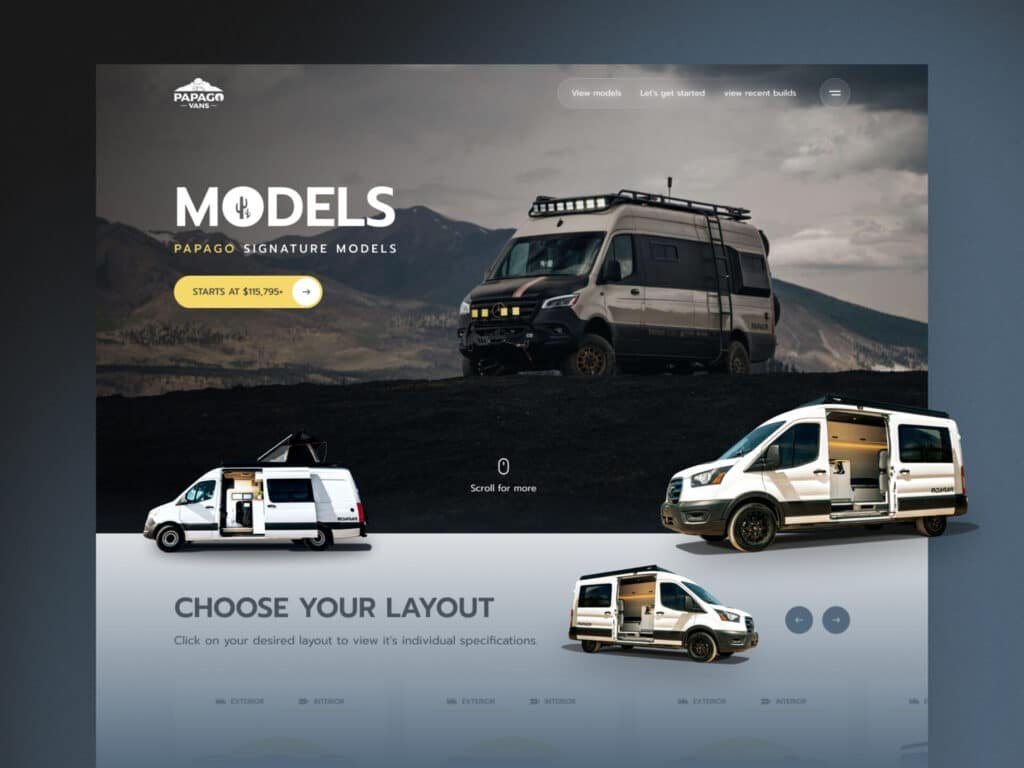
Premium Camper Van Website UI/UX Design for Modern Automotive Brands
The website serves as the central platform for showcasing camper van models, highlighting vehicle features, and helping customers discover the right van for their travel needs.
The Papago Vans-inspired design uses cinematic vehicle photography, bold typography, a refined color palette, and clear navigation to create a premium digital experience.
The website includes:
- Hero section featuring premium camper vans
- Dedicated vehicle model showcases
- Prominent calls to action
- Model discovery navigation
- Featured van builds
- Product information sections
- Custom build exploration
- Clear visual hierarchy
2. Interactive Camper Van Layout Selection
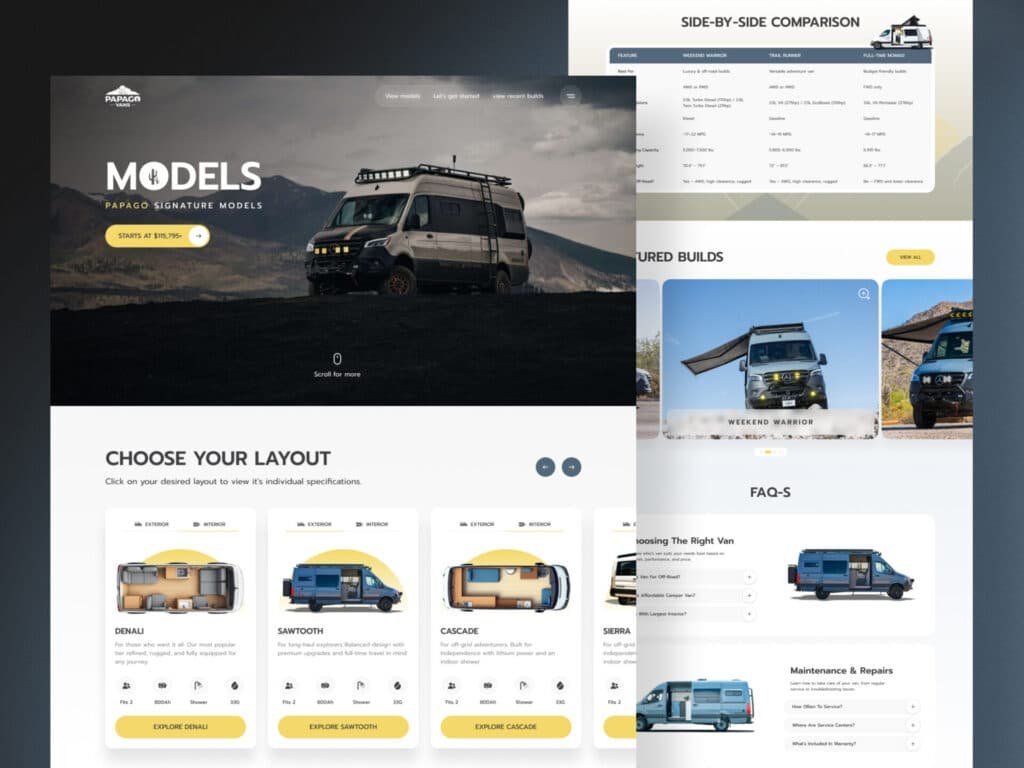
Camper Van Layout Selection UI for Exploring Vehicle Configurations
Choosing a camper van involves more than selecting an exterior design. Buyers also need to understand how the interior layout supports sleeping arrangements, storage, cooking, and everyday travel.
An interactive layout selection section allows customers to explore different configurations and understand the features available in each model.
Good camper van UI/UX design makes complex vehicle configurations easier to understand by presenting information through visual previews, clear labels, and consistent interface elements.
Creating an Intuitive Layout Exploration Experience
The design organizes camper van models into individual cards, allowing users to browse different configurations without losing context. Interior and exterior views help visitors understand both the vehicle’s appearance and its functional living space.
Clear navigation controls make it easier to explore additional models, while concise descriptions and feature indicators help users identify configurations that match their requirements.
3. Camper Van Model Pages and Product Specifications
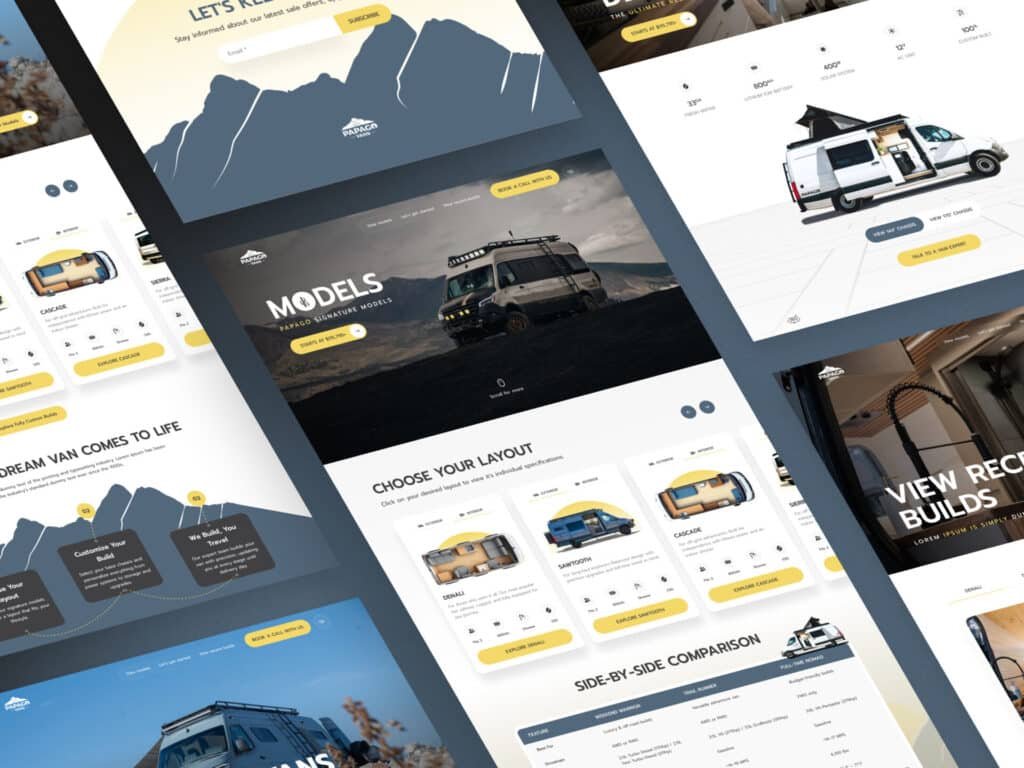
Camper Van Product Page Design for Clear Vehicle Information
Once customers identify an interesting model, they need detailed information to evaluate whether it meets their needs.
A well-structured vehicle detail page combines visual storytelling with practical specifications, giving customers a clearer understanding of the product.
Making Vehicle Specifications Easier to Understand
The website design uses structured information, clear headings, and visual indicators to present key features in an accessible format.
Specifications such as battery capacity, water storage, seating, and other vehicle features can be displayed using concise labels and icons. Product imagery complements these details by helping users connect technical information with the actual vehicle.
This combination of visual content and structured specifications creates a more informative and user-friendly browsing experience.
4. Custom Camper Van Builds and Upgrade Packages
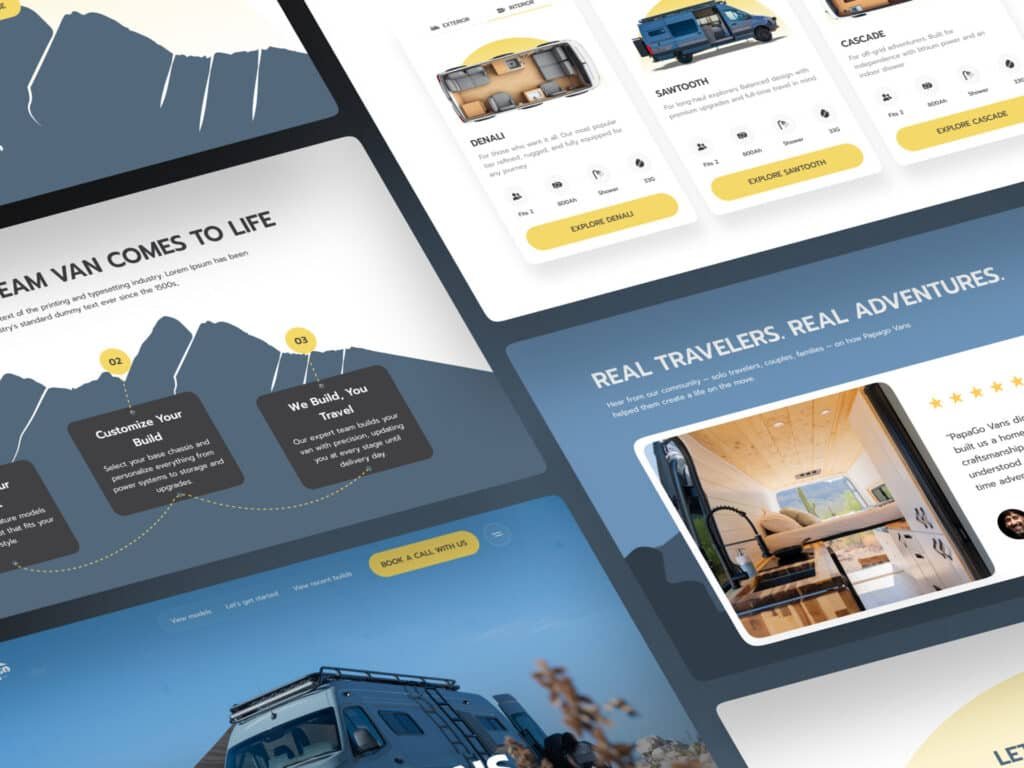
Custom Van Build Website Design for Personalized Experiences
Camper van buyers often have different priorities. Some want a vehicle designed for off-road adventures, while others prioritize comfortable interiors, extended travel, storage, or additional power systems.
A custom build experience helps brands present optional upgrades and specialized configurations in a clear, organized way.
An effective custom build interface should explain what each package offers without overwhelming visitors with too many choices at once.
For more advanced implementations, an interactive van configurator could allow users to select individual upgrades, review compatible options, and see how their choices affect the overall configuration.
5. Side-by-Side Camper Van Comparison
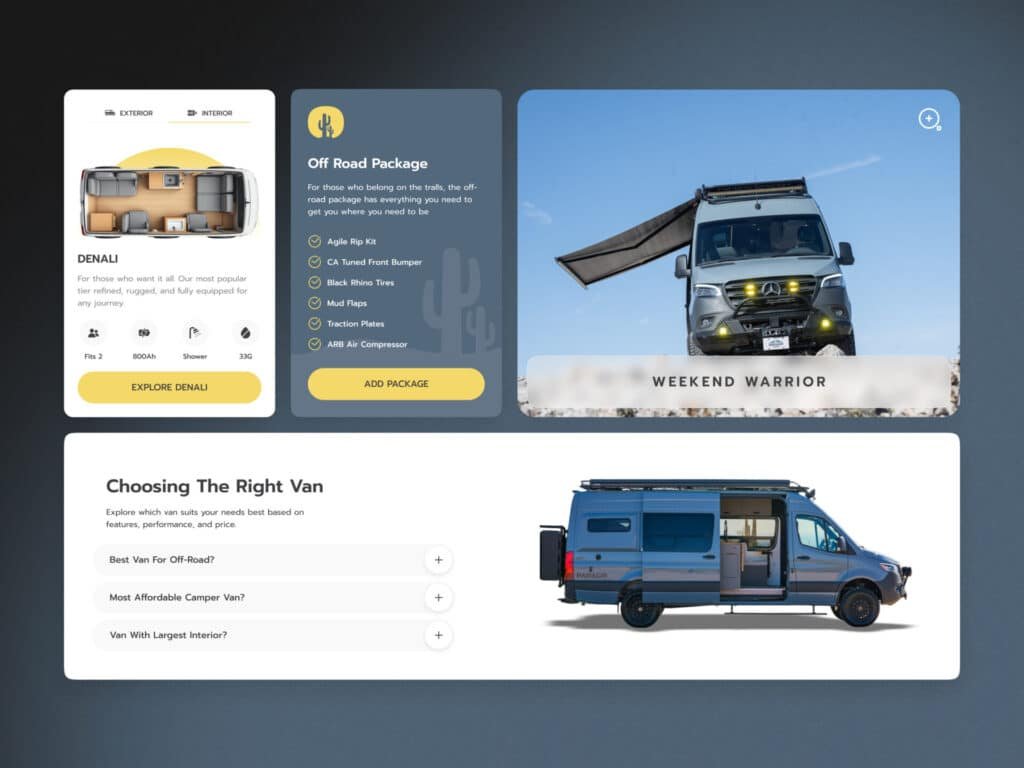
Vehicle Comparison Website UI for Better Buying Decisions
When multiple camper van models offer different layouts, specifications, and features, customers need an easy way to compare them.
A side-by-side comparison interface brings essential information into one view, helping buyers evaluate available options without repeatedly switching between product pages.
Why Vehicle Comparison UX Matters
An effective comparison interface helps:
- Highlight differences between models
- Reduce repetitive navigation
- Improve product transparency
- Support faster decision-making
This is an important part of automotive website design because purchasing a camper van often involves evaluating several technical and lifestyle-related factors.
6. Responsive Automotive Website Design
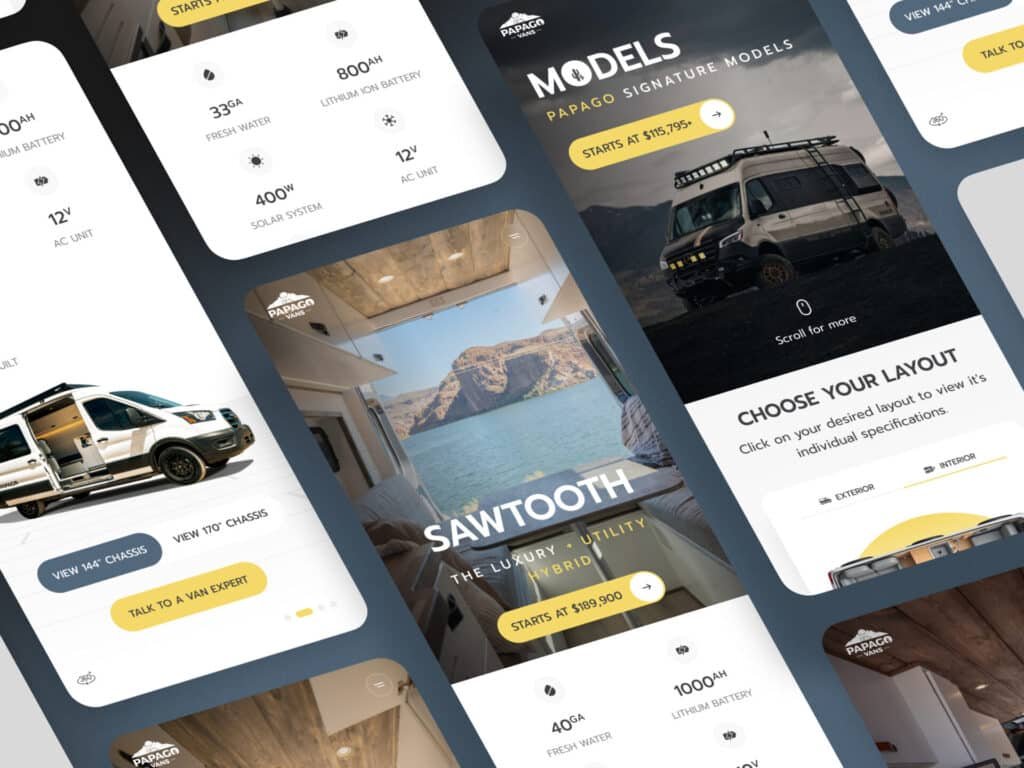
Responsive Website Design for Desktop, Tablet and Mobile
Customers may explore camper van models from desktop computers, tablets, or smartphones. A consistent experience across these devices is essential for making vehicle information accessible throughout the buying journey.
A responsive automotive website adapts its layout, content, imagery, and navigation to different screen sizes.
Why Responsive Design Matters
A well-designed responsive automotive website helps:
- Improve mobile usability
- Maintain consistent branding
- Make product information accessible
- Simplify navigation on smaller screens
- Support users across different devices
- Create a smoother browsing experience
A desktop layout that looks impressive may become difficult to use on a smaller screen if text becomes too small, buttons are hard to tap, or product comparisons require excessive horizontal scrolling.
7. Automotive Website Design System and Visual Identity
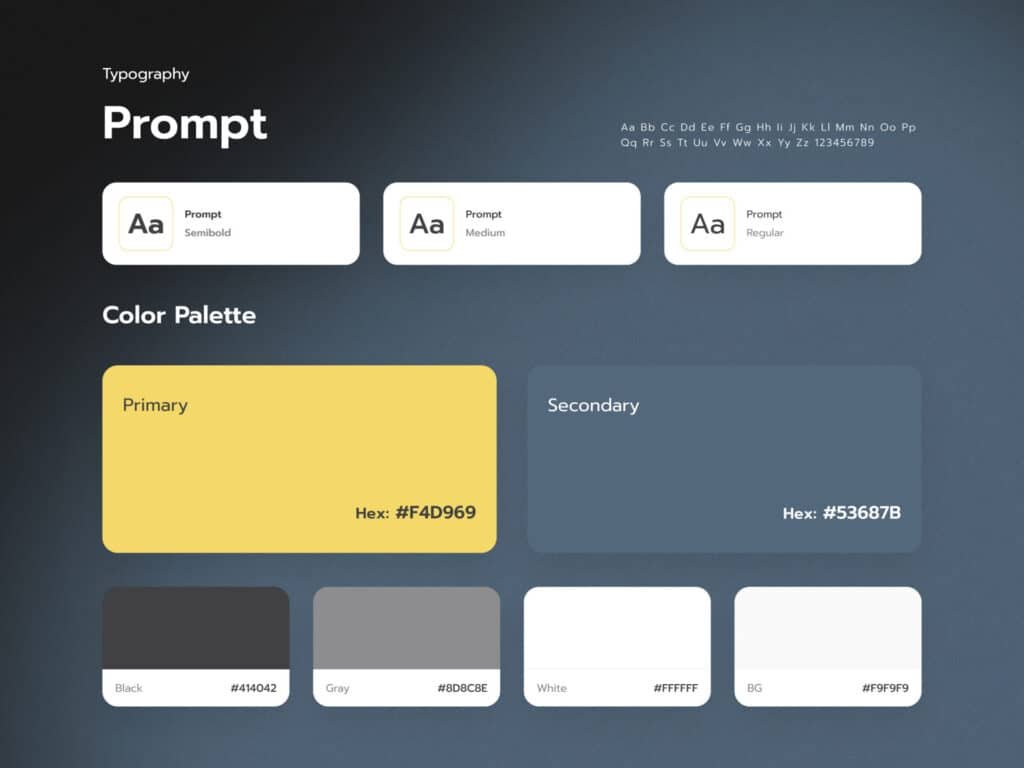
Creating a Consistent Design System for Automotive Brands
A premium automotive website needs a consistent visual language that connects product pages, navigation elements, model cards, comparison tables, and calls to action.
A design system helps maintain this consistency as the website grows and new features are introduced.
The design system can include:
- Typography guidelines
- Primary and secondary colors
- Button styles
- Iconography
- Card components
- Navigation patterns
- Form elements
- Spacing guidelines
- Image presentation rules
- Responsive layout patterns
Why Design Systems Matter
A strong design system helps:
- Maintain visual consistency
- Improve interface usability
- Strengthen brand recognition
- Simplify website maintenance
- Support future scalability
- Accelerate design and development
Together, these elements demonstrate how a clear design system can support a premium automotive identity without compromising usability.
Benefits of Premium Camper Van Website Design
A well-designed camper van website can create value for both automotive brands and their customers.
Key benefits include:
- Improved vehicle discovery
- Better product presentation
- Easier model comparison
- Clearer technical specifications
- More engaging customization experiences
- Improved mobile usability
- Stronger brand identity
- Better customer engagement
- More intuitive navigation
- Greater support for customer inquiries
By combining visual storytelling, interactive layouts, structured product information, and responsive interfaces, automotive brands can create a more effective digital experience for potential buyers.
Conclusion
The premium camper van website concept designed by Devoq Design demonstrates how strategic automotive website design can transform vehicle discovery into a more engaging and intuitive digital experience.
A thoughtful camper van UI/UX design approach helps simplify product exploration, improve the presentation of vehicle features, and make customization options easier to understand. Meanwhile, a responsive automotive website ensures that the experience remains accessible.
At Devoq Design, the focus is on creating intuitive, visually engaging, and user-centered digital experiences that help brands communicate their products and connect with their audiences.