
Introduction
Modern businesses, designers, and content creators need more than a basic blog to share their ideas, showcase their expertise, and build an online presence. A well-designed blog website helps readers discover valuable content, explore different topics, and engage with articles through an intuitive digital experience.
However, many blog websites still struggle with common usability challenges such as:
- Complex article navigation
- Cluttered content layouts
- Poor readability and typography
- Inconsistent visual design
- Difficult content discovery
- Limited mobile responsiveness
- Poorly organized article categories
- Unengaging user experiences
The result?
- Lower reader engagement
- Higher bounce rates
- Reduced content discoverability
- Difficult navigation between articles
- Inconsistent brand identity
- Poor mobile browsing experiences
Modern blog website UI/UX design helps address these challenges by transforming content-heavy websites into organized, visually engaging, and easy-to-navigate digital experiences.
1. Modern Blog Website Homepage Design
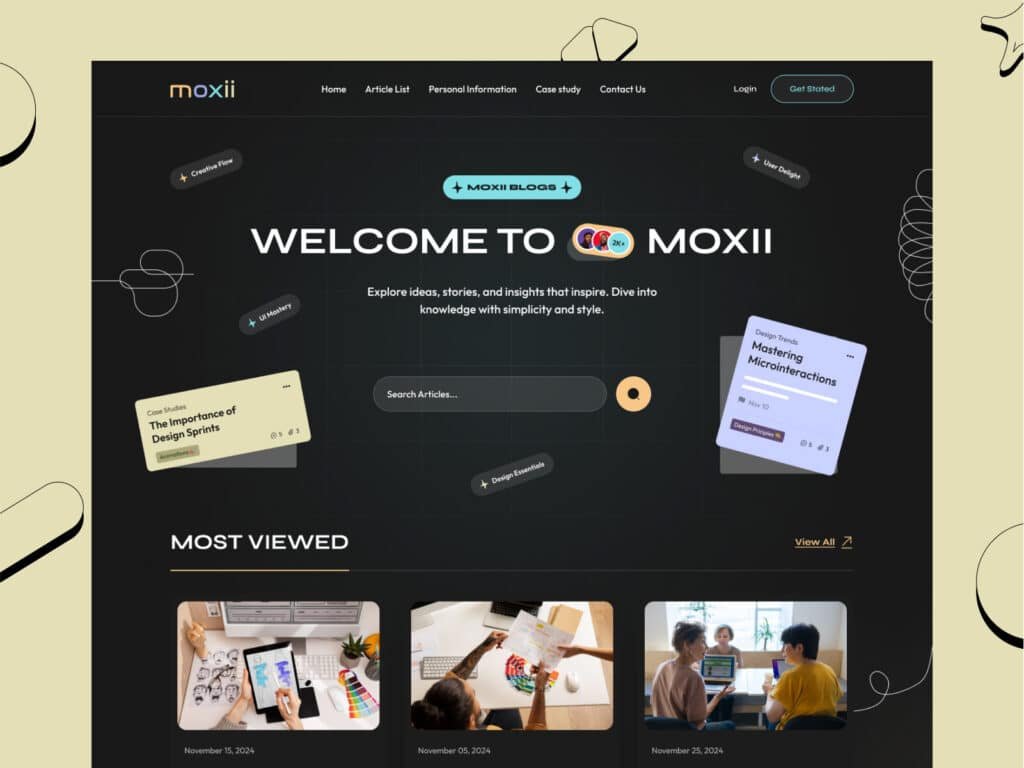
Modern Blog Website UI/UX Design for Engaging Content Experiences
The homepage is the first point of interaction between readers and a blog platform. It should communicate the website’s identity, highlight valuable content, and help visitors discover articles without unnecessary effort.
The Moxii homepage features a dark interface, bold typography, colorful accents, and floating article cards that create a distinctive visual identity.
Why Homepage UX Matters
A well-designed blog homepage helps:
- Improve first impressions
- Increase article discovery
- Strengthen brand recognition
- Guide users toward relevant content
- Improve engagement
- Simplify website navigation
The homepage organizes important content into clear sections, allowing visitors to understand the website’s purpose and explore featured articles quickly.
2. Blog Article Listing and Content Discovery
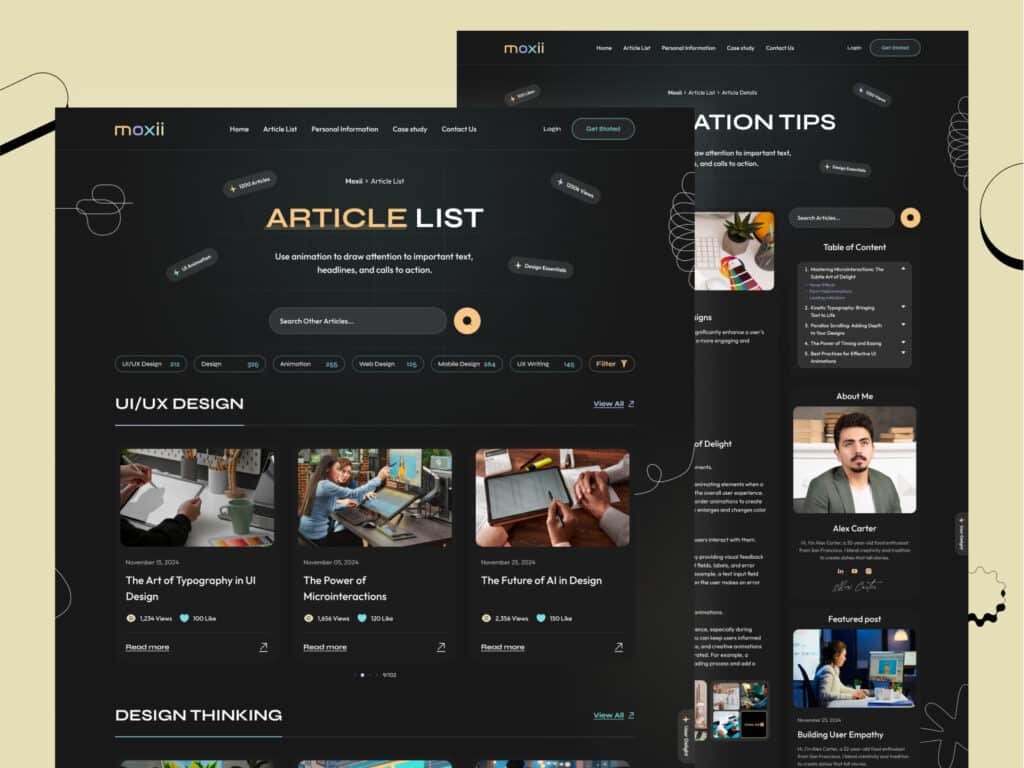
Blog Article Listing UI With Search, Categories and Content Cards
An article listing page helps readers explore a collection of blog posts and identify content that matches their interests. As the number of published articles grows, an organized listing experience becomes essential.
The Moxii article listing page uses structured content cards, category filters and a search bar to make browsing more intuitive.
A well-structured article card should communicate essential information at a glance. Readers should be able to recognize the topic, understand the article’s purpose, and decide whether to continue reading.
3. Individual Blog Page and Reading Experience
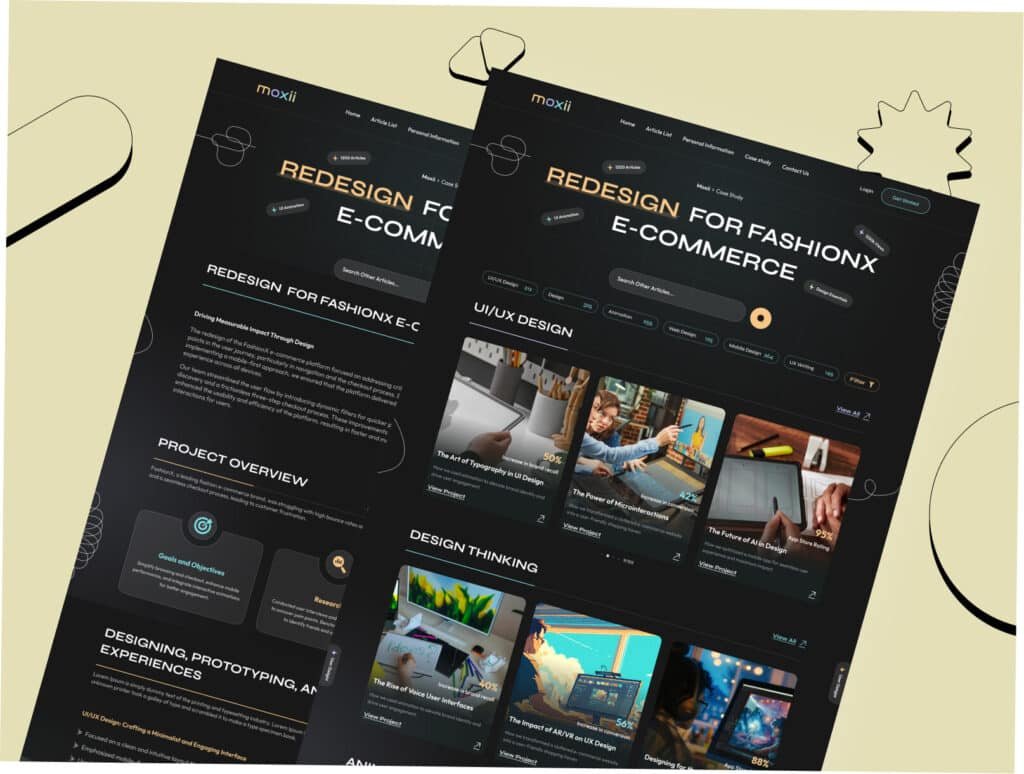
Blog Article Page Design With Readable Typography and Structured Content
An individual article page is where readers spend time consuming content. While visual design attracts attention, readability, content structure, and navigation determine whether visitors can comfortably engage with the article.
Making Long-Form Content Easier to Read
Readers rarely process every paragraph in the same way. Many scan headings, review highlighted information, and jump to sections that answer their questions.
A clear heading hierarchy, sufficient line spacing, readable font sizes, and appropriate paragraph lengths make articles easier to understand.
4. Modern Blog Website UI/UX Design with Contact Details
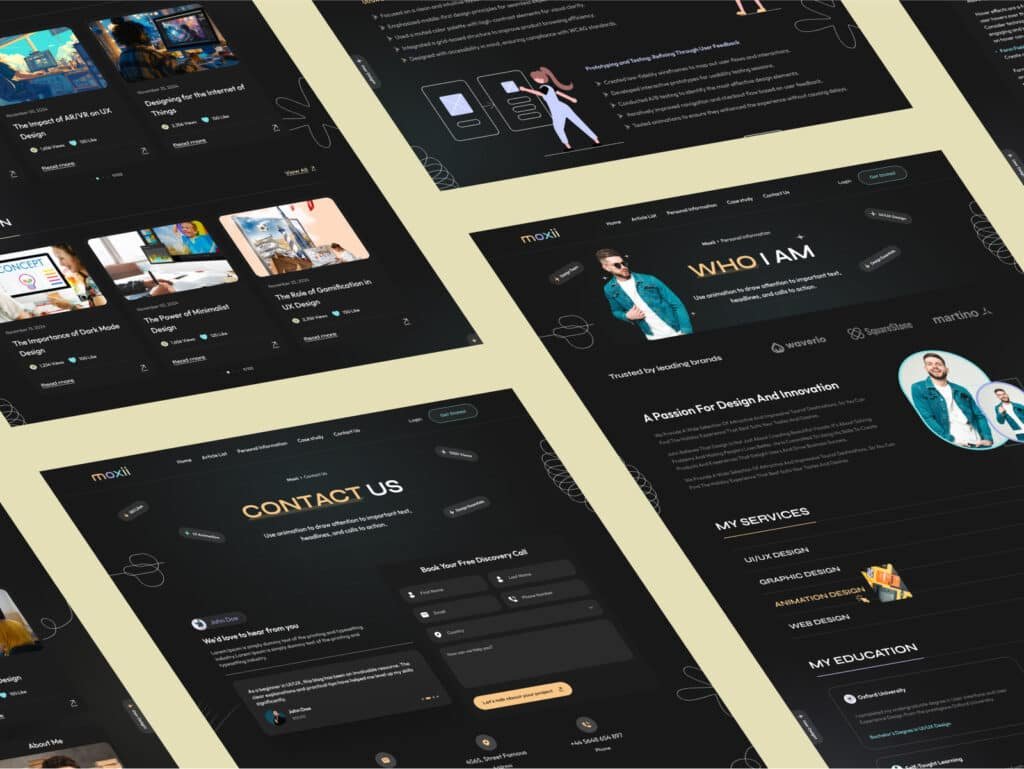
Modern blog website UI/UX design featuring a contact details
Readers access blog content through desktops, tablets, and smartphones. A website that works well only on a large screen can create frustrating experiences for mobile visitors.
On desktop screens, article cards can appear in multiple columns, giving readers a broad overview of available content. On smaller screens, these cards can rearrange into a single-column layout that prioritizes readability.
Responsive design should not simply shrink the desktop interface. It should adapt the layout to the user’s device and context while preserving the essential functionality of the website.
5. Responsive Blog Website Design for Desktop and Mobile
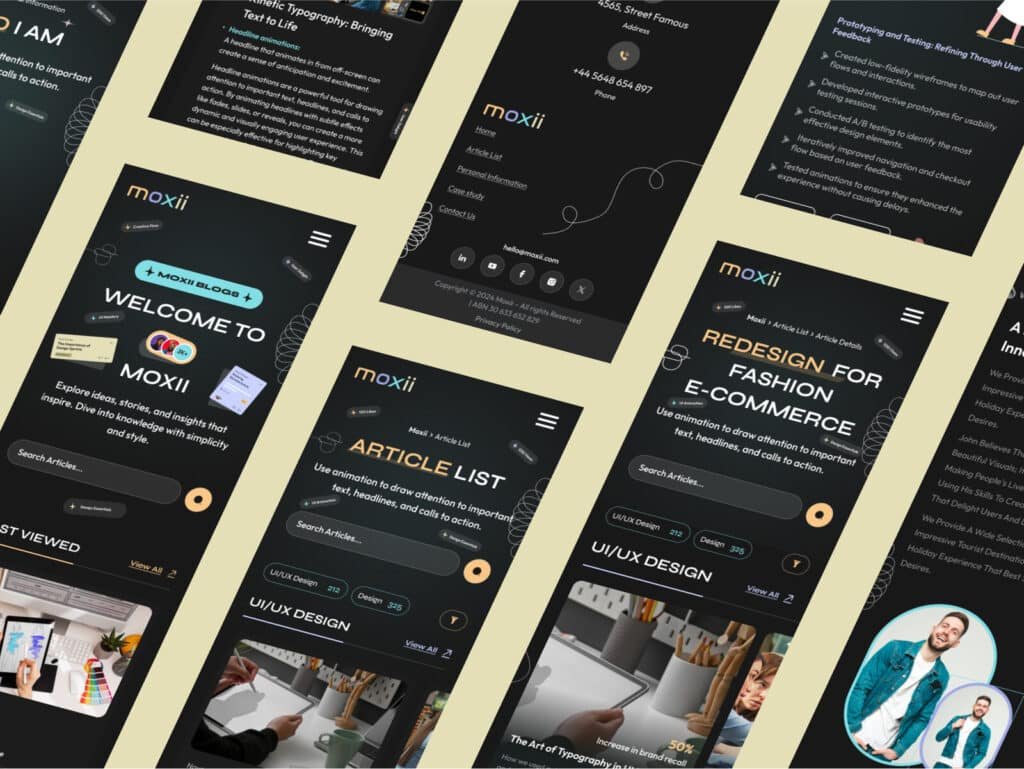
Responsive blog website design showcasing dark-themed article listing pages
A blog dashboard UI design focuses on organizing content-related information into a clear and manageable interface.
While readers interact with the public-facing website, content creators and administrators need efficient tools to manage articles, categories, and publishing workflows.
Why Blog Dashboard UX Matters
A well-designed blog dashboard helps:
- Simplify content management
- Improve editorial workflows
- Reduce repetitive administrative tasks
- Make publishing status easier to track
- Support collaboration between authors and editors
- Improve visibility into content performance
Dashboard analytics can also provide insights into article views, engagement, and content performance. These metrics should be presented with clear labels and appropriate visualizations rather than overwhelming users with unnecessary data.
6. Modern Blog Website UI Design Color Palette and Typography
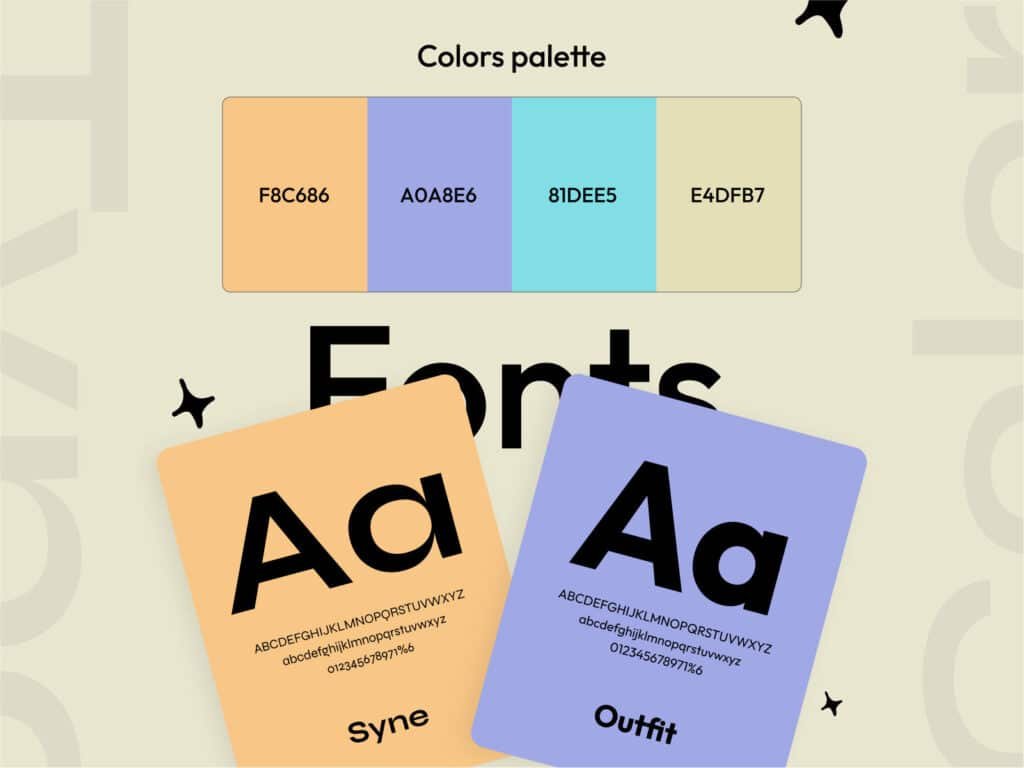
Modern Blog Website Design System With Typography, Colors and UI Components
A consistent design system helps maintain a unified visual experience across the homepage, article listings, individual blog pages, and other website sections.
As a blog platform grows, reusable components and clear design guidelines make it easier to introduce new features without compromising consistency.
The Moxii design system includes:
- Typography guidelines
- Color palette
- Buttons and links
- Article cards
- Navigation elements
- Form components
- Search fields
- Category tags
- Content containers
- Spacing guidelines
- Icons and decorative elements
- Responsive layout patterns
Why Design Systems Matter
A strong design system helps:
- Maintain visual consistency
- Improve interface usability
- Accelerate design and development
- Simplify future updates
- Support website scalability
- Strengthen brand identity
- Reduce inconsistent UI patterns
Creating Visual Consistency
The Moxii concept combines a dark interface with warm cream backgrounds, vibrant accent colors, and bold typography to create a recognizable visual identity.
The palette features complementary colors such as peach (#F8C686), lavender (#A0A8E6), cyan (#81DEE5), and cream (#E4DFB7). These colors help distinguish interactive elements and create visual contrast across the design.
Typography establishes hierarchy between headlines, article titles, body content, and supporting labels. Reusable cards and buttons ensure that similar interactions look and behave consistently throughout the website.
Benefits of a Modern Blog Website UI/UX Design
A thoughtfully designed blog platform creates value for readers, content creators, and businesses.
Key benefits include:
- Improved content discovery
- Better article readability
- Easier website navigation
- Stronger visual branding
- Improved mobile usability
- More consistent user experiences
- Better content organization
- Increased reader engagement opportunities
- Simplified content management
- Scalable website architecture
By combining clear information architecture, responsive layouts, intuitive navigation, and reusable components, a modern blog website can make content easier to discover and more enjoyable to read.
Conclusion
The Moxii blog website concept demonstrates how strategic UI/UX design can transform a content-heavy website into a modern, engaging, and intuitive digital experience.
Whether you’re building a personal blog, design publication, business blog, or content-driven platform, investing in professional blog website UI/UX design, responsive blog website design, blog dashboard UI design, and modern blog website design can help create a more usable, accessible, and scalable digital experience.
At Devoq Design, thoughtful UI/UX design focuses on bringing content, functionality, and visual identity together to create websites that are not only visually appealing but also easy to navigate and built around user needs.