
Introduction
Modern businesses need more than just an attractive website to establish a strong digital presence. They need digital experiences that communicate their brand identity, showcase their services, build trust, and guide visitors toward meaningful actions.
As user expectations continue to evolve, businesses are investing in modern website design to create websites that are visually appealing, easy to navigate, responsive, and user-friendly.
However, many business websites still struggle with common design challenges such as:
- Cluttered layouts and inconsistent spacing
- Poor website navigation
- Outdated visual design
- Inconsistent typography and color palettes
- Difficult mobile browsing experiences
- Unclear calls to action
- Poor presentation of services and case studies
- Inconsistent branding across website pages
The result?
- Lower user engagement
- Poor mobile usability
- Reduced brand credibility
- Difficulty communicating business value
- Missed conversion opportunities
- Inconsistent user experiences
- Reduced website effectiveness
Modern website design trends in 2026 focus on solving these challenges through clean layouts, consistent design systems, thoughtful typography, responsive web design, and user-centered interfaces.
The website design concepts featured by Devoq Design demonstrate how strategic UI/UX design can transform a business website into a cohesive digital experience. From minimalist homepage layouts and service cards to testimonials, partner sections, blog pages, and brand color systems, each element contributes to a more professional and engaging online presence.
1. Modern Business Website Homepage Design
Modern Website Design Inspiration for Business Websites in 2026
The homepage is often the first major interaction visitors have with a business. It should communicate the brand’s purpose, introduce its services, and help users understand what to do next.
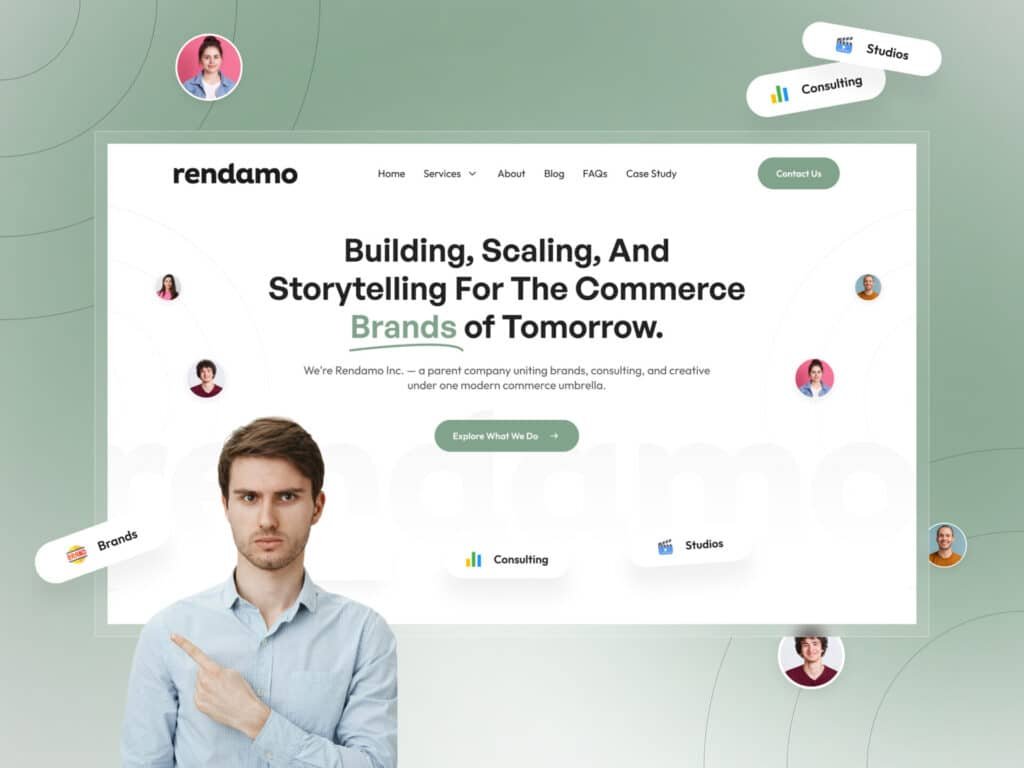
The website concept features a clean homepage with a bold headline, concise supporting text, a prominent call-to-action button, and floating visual elements representing different business divisions.
The homepage design includes:
- Clear brand identity and logo placement
- Simple navigation menu
- Bold hero headline
- Supporting introductory content
- Prominent call-to-action button
- Floating service labels
- Subtle decorative background elements
- Consistent brand colors
- Clear visual hierarchy
2. Minimalist Website Design and Clean Layouts
Minimalist Website Design with Clean Layouts and Modern UI Elements
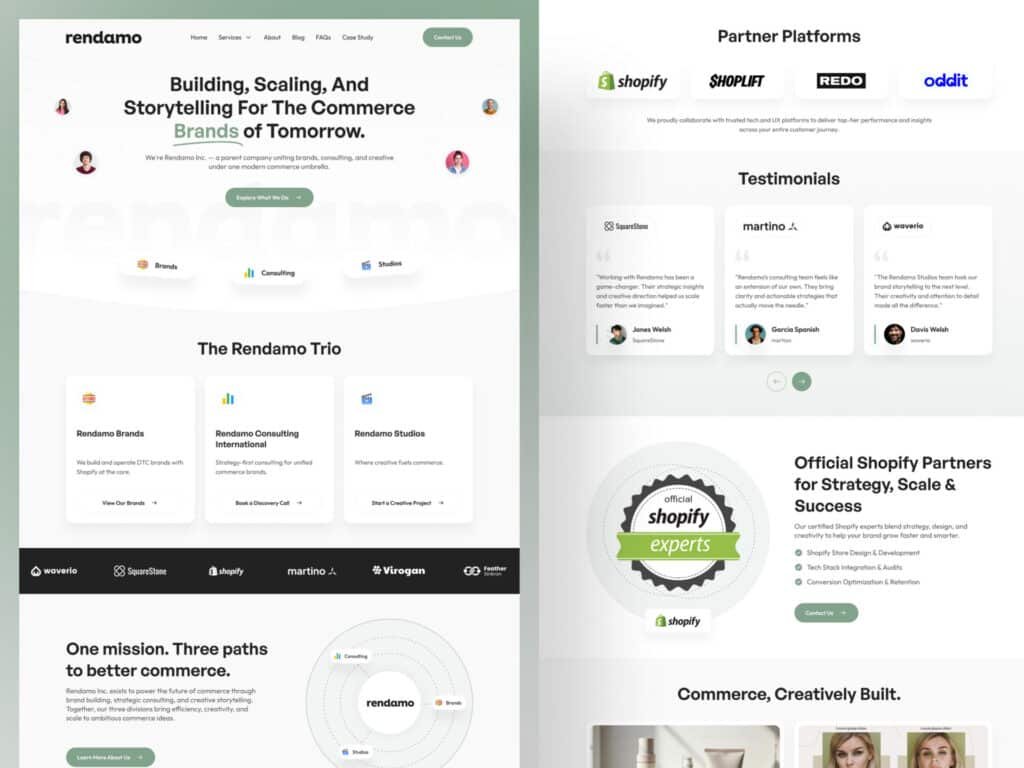
Minimalist design remains a useful approach for businesses that want to create a polished, professional, and easy-to-navigate website.
The design references use white backgrounds, generous whitespace, subtle gray sections, rounded cards, and restrained green accents. These elements create a consistent visual experience without overwhelming visitors.
Why Minimalist Website Design Matters
A well-organized minimalist interface helps:
- Improve content readability
- Reduce visual clutter
- Make important information easier to find
- Strengthen brand presentation
- Create a more focused browsing experience
- Improve consistency across pages
3.Responsive Web Design for Modern Business Websites

Responsive Web Design for Modern Business Websites Across
Visitors access websites through smartphones, tablets, laptops, and desktop computers. This makes responsive web design essential for modern digital experiences.
A responsive website adapts its layout and content to different screen sizes, helping users navigate pages and interact with important elements regardless of their device.
Creating a Better Responsive Experience
Designers need to consider how content should reorganize as the available space changes. Multi-column sections may become single-column layouts, navigation may become a compact menu, and cards should resize without losing readability.
4. Blog and Content-Driven Website Design

Modern Blog Website Design with Editorial Cards and Featured Images
A business website can also serve as a platform for sharing knowledge, demonstrating expertise, and attracting visitors through useful content.
The website references feature editorial cards with article images, publication dates, titles, short descriptions, and links to read more. This structure creates a consistent experience for browsing articles and exploring related topics.
A modern blog section can include:
- Featured blog posts
- Descriptive article titles
- Relevant thumbnail images
- Publication dates
- Short article summaries
- Read-more links
- Related content
Use descriptive titles, consistent image dimensions, and short summaries. Optimize images for loading performance and provide meaningful alternative text for informative visuals.
5. Testimonials and Partner Logo Sections

Modern Website Testimonials and Partner Platform UI Design
Trust is an important factor in a visitor’s decision to engage with a business. Testimonials, partner logos, and customer stories help demonstrate credibility and provide context about a company’s work.
The website design concepts feature testimonial cards with customer quotations, profile images, names, and company identifiers. A separate partner section presents platform logos in a consistent layout.
These sections can include:
- Customer testimonials
- Client profile images
- Company names
- Partner platform logos
- Customer success stories
- Testimonial navigation
Testimonials should be authentic, relevant, and easy to read. Partner logos should be displayed consistently and only when their use is authorized.
6. Consistent Design Systems Across Website Pages

Modern Website Design System with Typography, Color Palette, UI Components
A modern business website often contains multiple pages, including the homepage, service pages, blog, testimonials, case studies, and contact forms.
The design references demonstrate a unified visual identity through recurring colors, typography, rounded cards, button styles, spacing, and navigation elements.
A website design system can include:
- Brand color tokens
- Typography styles
- Buttons and links
- Navigation components
- Cards and content blocks
- Form fields
- Icons and illustrations
- Spacing guidelines
- Border radii and shadows
- Responsive layout rules
Why Web Design Trends 2026 Matter for Businesses
As customers increasingly rely on digital channels to research companies and evaluate services, a website plays an important role in shaping brand perception.
Modern web design trends 2026 provide inspiration for creating more intuitive, consistent, and engaging digital experiences. However, successful design requires more than following visual trends.
Businesses should prioritize:
- User-centered design
- Clear navigation
- Responsive web design
- Accessibility and readability
- Consistent branding
- Fast page loading
- Useful and well-organized content
- Clear calls to action
- Search engine-friendly page structure
- Scalable design systems
A modern website should look professional while helping visitors complete their goals with minimal friction.
Organizations investing in thoughtful website UI/UX design can create more consistent online experiences, communicate their value more clearly, and establish a stronger foundation for future growth.
Conclusion
The website design concepts featured by Devoq Design demonstrate how modern website design trends in 2026 can be applied to create a professional, cohesive, and user-friendly business website.
From minimalist homepage layouts and carefully selected color palettes to responsive web design, service cards, testimonials, blog sections, and case study pages, each element contributes to the overall digital experience.
Typography and design systems provide consistency, while clear navigation and well-structured content help visitors understand the business and explore its offerings.