
Healthcare is rapidly evolving, and telemedicine has become a cornerstone of modern patient care. Patients increasingly expect convenient, secure, and accessible digital healthcare experiences that allow them to consult medical professionals without geographical limitations.
However, many telemedicine platforms struggle with the same challenges:
- Complicated appointment booking experiences
- Confusing healthcare navigation systems
- Poor mobile responsiveness
- Difficult patient onboarding processes
- Limited accessibility features
- Weak virtual consultation experiences
- Generic healthcare interfaces that fail to build trust
The result?
Patients abandon consultations.
Healthcare providers experience lower engagement.
Platform adoption decreases.
Business growth opportunities are lost.
Modern telemedicine website design requires more than functional healthcare tools. It demands intuitive experiences that prioritize patient needs while supporting healthcare providers with efficient digital workflows.
Successful telemedicine platforms need:
- Patient-centric healthcare experiences
- Seamless appointment scheduling
- Intuitive healthcare UI systems
- Secure virtual consultation experiences
- Mobile-first accessibility
- Scalable healthcare technologies
- Modern healthcare UI/UX design
This is where strategic healthcare product design becomes a competitive advantage.
The Adiba telemedicine platform concept created by Devoq Design demonstrates how thoughtful healthcare app UI/UX design can transform complex healthcare journeys into streamlined digital experiences that improve accessibility, trust, and patient satisfaction.
Whether you’re building a telemedicine startup, healthcare SaaS product, or virtual healthcare ecosystem, partnering with an experienced healthcare product design team helps create experiences that drive adoption and improve patient outcomes.
1. Telemedicine Homepage Experience
The homepage often serves as the first interaction patients have with a healthcare platform.
Within seconds, users evaluate:
- Platform credibility
- Ease of use
- Healthcare professionalism
- Service accessibility
- Trustworthiness
- Overall experience quality
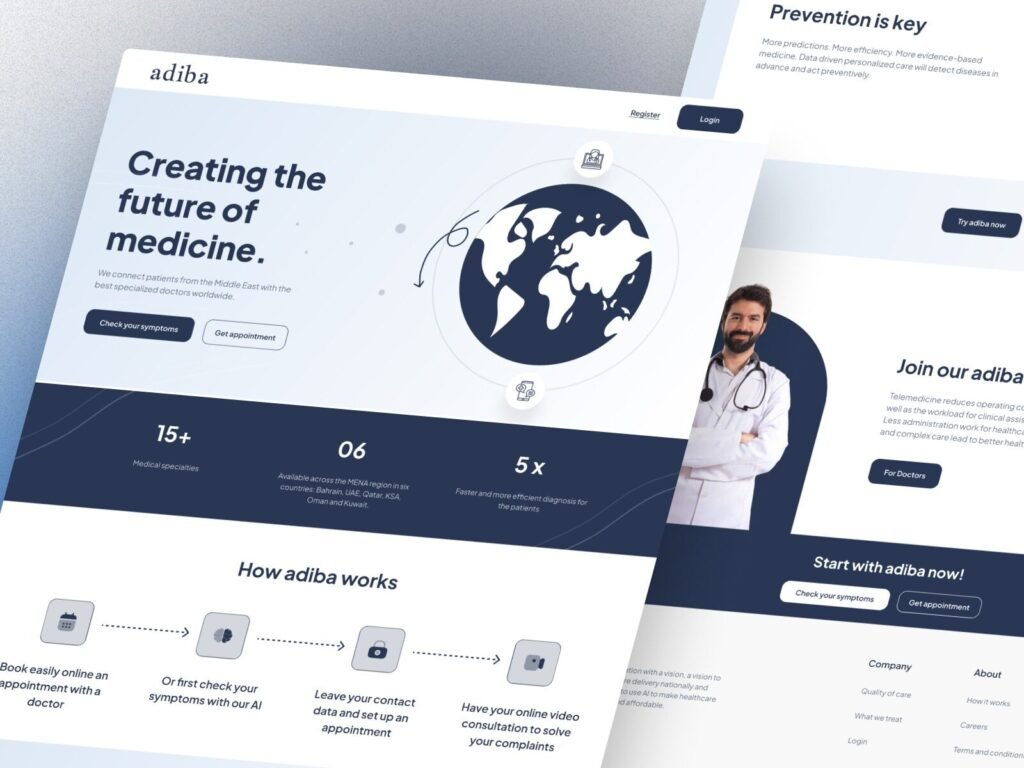
The Adiba homepage was designed to simplify healthcare interactions while communicating the value of virtual care.
The homepage includes:
- Clear healthcare messaging
- Appointment-focused CTAs
- AI-powered symptom guidance
- Accessible navigation systems
- Trust-building healthcare visuals
- Patient-focused storytelling
Rather than overwhelming users with information, the interface emphasizes simplicity and reassurance.
Why Homepage UX Matters
A well-designed healthcare homepage improves:
- Appointment bookings
- Patient confidence
- Platform understanding
- Brand trust
- User engagement
Strong homepage experiences play a crucial role in effective telemedicine website design.
Telemedicine platform homepage UI design
2. Telemedicine Features & Virtual Consultation Capabilities
Patients need clarity before engaging with virtual healthcare services.
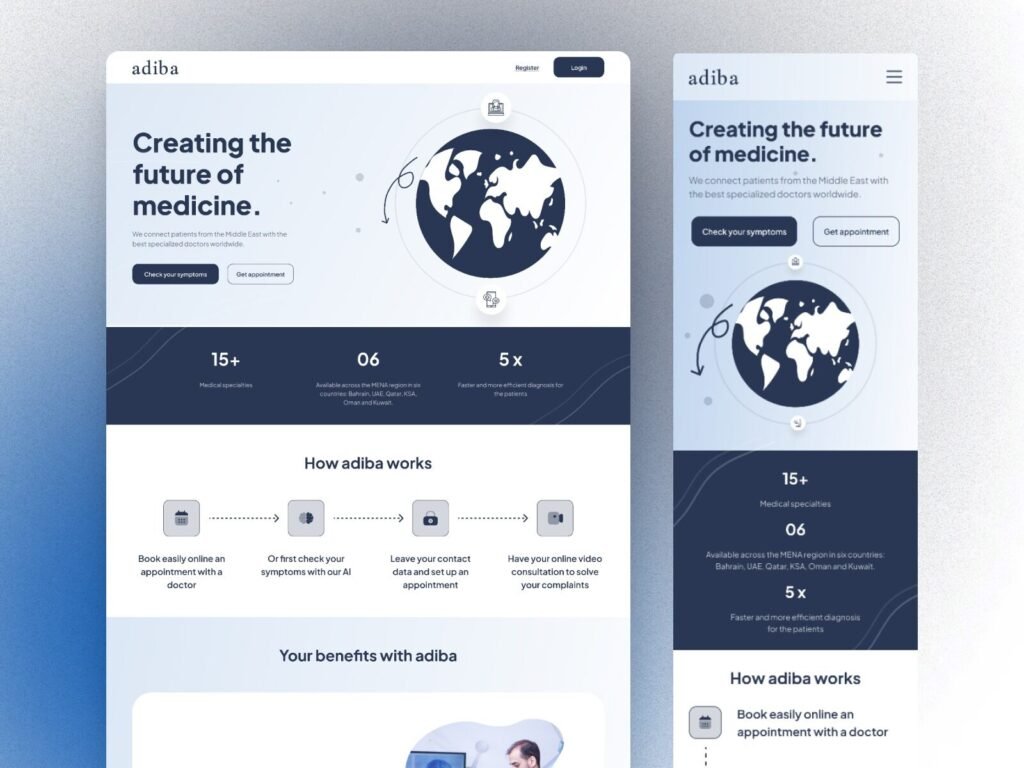
The Adiba platform presents its telemedicine capabilities through structured information architecture and intuitive visual experiences.
Key capabilities include:
- Online appointment scheduling
- Virtual doctor consultations
- AI-assisted symptom assessments
- Healthcare accessibility features
- Secure communication systems
- Mobile healthcare experiences
Rather than relying on technical complexity, the platform focuses on educating users through approachable design.
Why Feature Presentation Matters
Clear feature presentation helps:
- Improve patient understanding
- Increase healthcare adoption
- Reduce uncertainty
- Strengthen trust
- Support healthcare accessibility
Strong virtual consultation platform design enables patients to navigate digital healthcare confidently.
Responsive telemedicine website and mobile design
3. Patient Journey & Healthcare Platform Experience
Modern healthcare experiences should support patients throughout every stage of their journey.
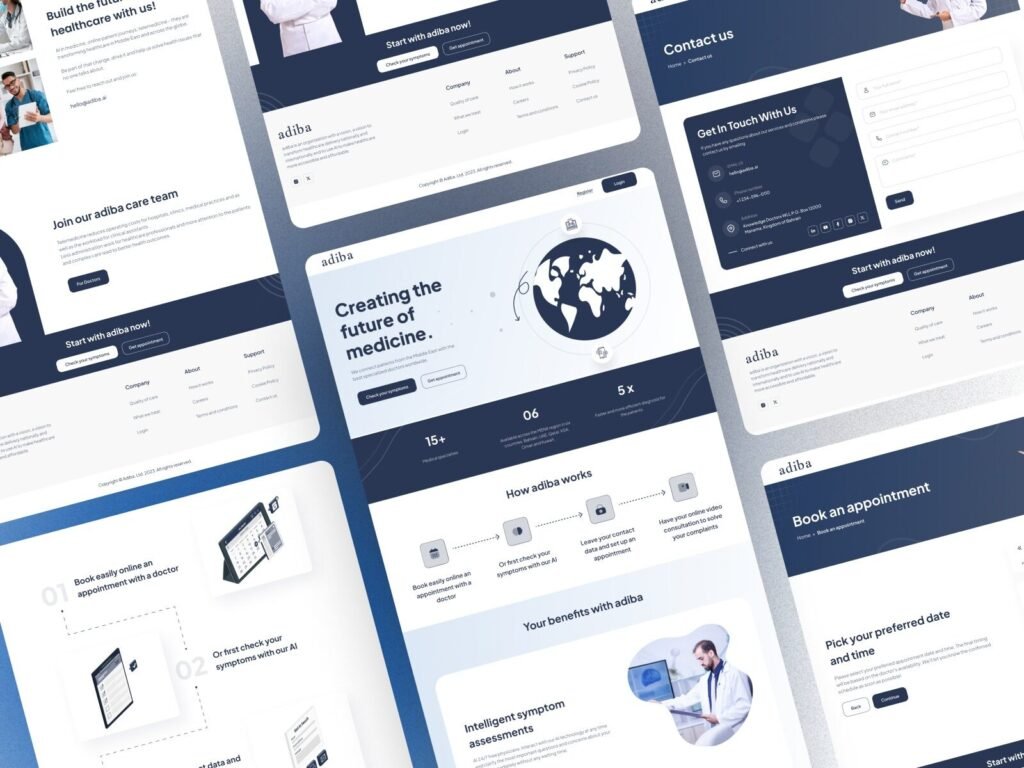
From discovering healthcare providers to attending virtual consultations, each interaction contributes to overall satisfaction.
The Adiba patient experience includes:
- Doctor discovery experiences
- Appointment workflows
- Consultation preparation tools
- Health information accessibility
- Follow-up support mechanisms
- Seamless healthcare touchpoints
The platform uses structured layouts and intuitive interfaces to reduce patient anxiety.
Why Patient Journey Design Matters
Effective patient experiences improve:
- Healthcare accessibility
- Patient engagement
- Service completion rates
- Satisfaction levels
- Platform retention
Patient-centered experiences remain fundamental to successful healthcare UI/UX design strategies.
Patient-centric telemedicine platform interface design
4. Mobile Healthcare Experience & App Accessibility
Healthcare increasingly happens on mobile devices.
Patients expect to schedule appointments, access medical information, and connect with providers from anywhere.
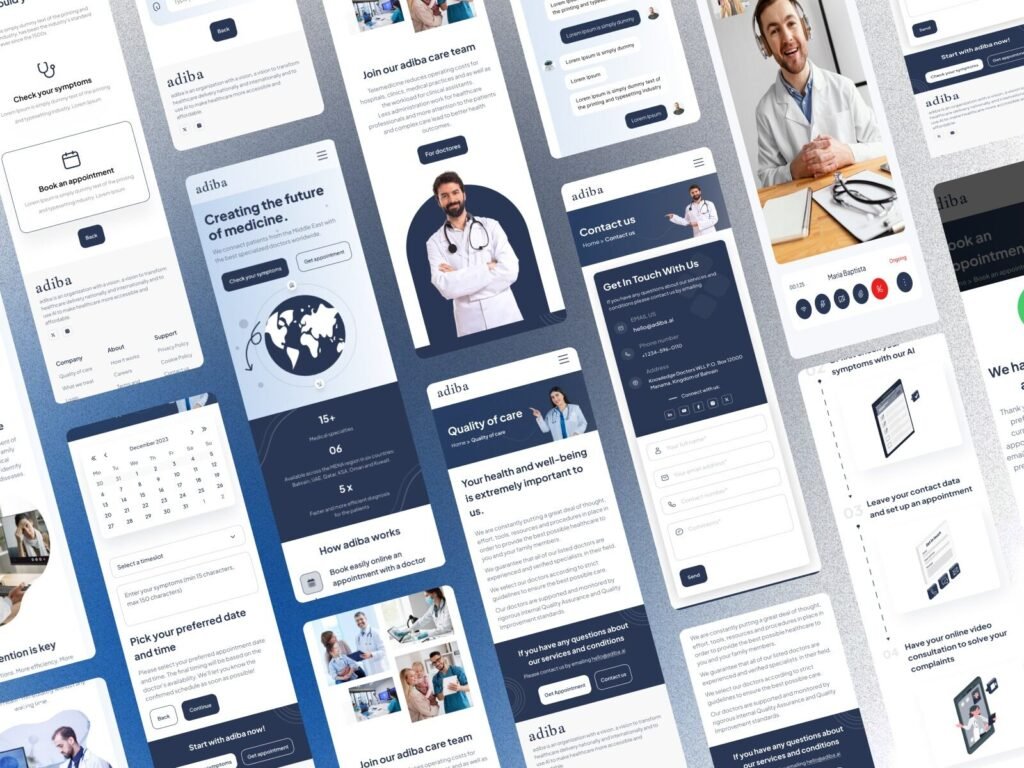
Strong healthcare app UI/UX design ensures that mobile healthcare experiences remain accessible and intuitive.
The mobile experience includes:
- Responsive healthcare interfaces
- Simplified appointment management
- Mobile consultation access
- User-friendly navigation systems
- Accessibility-focused layouts
- Streamlined healthcare interactions
The Adiba mobile experience prioritizes convenience without sacrificing functionality.
Why Mobile Healthcare UX Matters
Effective mobile healthcare experiences help:
- Improve patient accessibility
- Increase healthcare engagement
- Enhance convenience
- Support healthcare inclusivity
- Improve digital health adoption
Mobile-first healthcare experiences have become essential components of best telemedicine website UI/UX practices.
Healthcare app UI/UX design for telemedicine services with mobile appointment
5. Virtual Consultation Workflow Experience
The success of any telemedicine platform depends heavily on how easily patients can connect with healthcare providers. Complicated consultation workflows often create frustration and lead to appointment abandonment.
The Adiba platform was designed to simplify the entire virtual care journey, ensuring patients receive timely access to medical professionals through intuitive digital experiences.
The consultation workflow includes:
- Symptom assessment experiences
- Doctor selection interfaces
- Appointment confirmation systems
- Virtual consultation access
- Secure patient-provider communication
- Post-consultation follow-up pathways
Rather than introducing unnecessary complexity, the platform guides patients through each step using clear instructions and streamlined interactions.
Why Virtual Consultation UX Matters
Effective virtual consultation platform design helps:
- Improve healthcare accessibility
- Increase appointment completion rates
- Reduce patient confusion
- Strengthen patient-provider relationships
- Improve overall healthcare satisfaction
As telemedicine adoption continues to rise, consultation workflows must prioritize simplicity, trust, and efficiency.
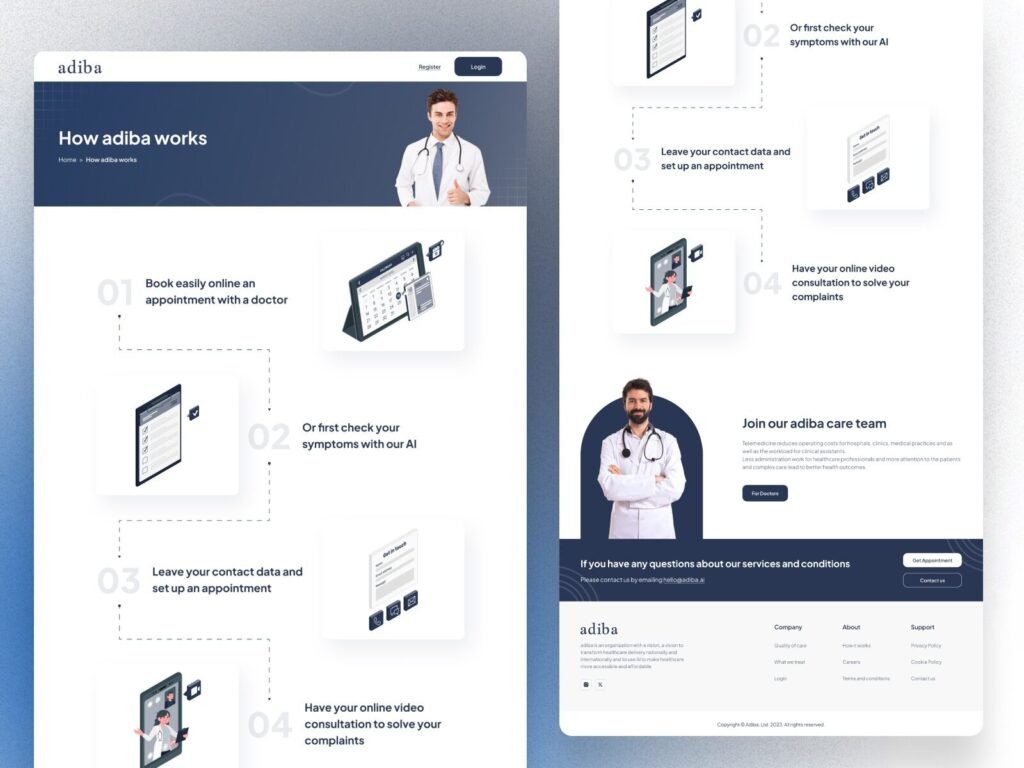
Virtual consultation workflow interface design
6. Benefits of the Adiba Telemedicine Platform
Modern telemedicine solutions provide value far beyond convenience. When designed correctly, they improve healthcare outcomes while enhancing operational efficiency for providers.
The Adiba platform focuses on delivering meaningful benefits for both patients and healthcare organizations.
Key benefits include:
- Improved healthcare accessibility
- Faster access to medical professionals
- Increased patient engagement
- Reduced travel requirements
- Greater appointment flexibility
- Enhanced healthcare convenience
- Improved patient satisfaction
- Better healthcare efficiency
By removing common barriers associated with traditional healthcare delivery, telemedicine platforms empower patients to take a more active role in their health management.
Why Telemedicine Benefits Matter
Patient-centric telemedicine experiences help businesses:
- Expand healthcare reach
- Improve service accessibility
- Increase patient retention
- Enhance brand trust
- Strengthen competitive advantage
- Support digital healthcare transformation
Organizations investing in thoughtful telemedicine website design position themselves to meet the evolving expectations of modern healthcare consumers.
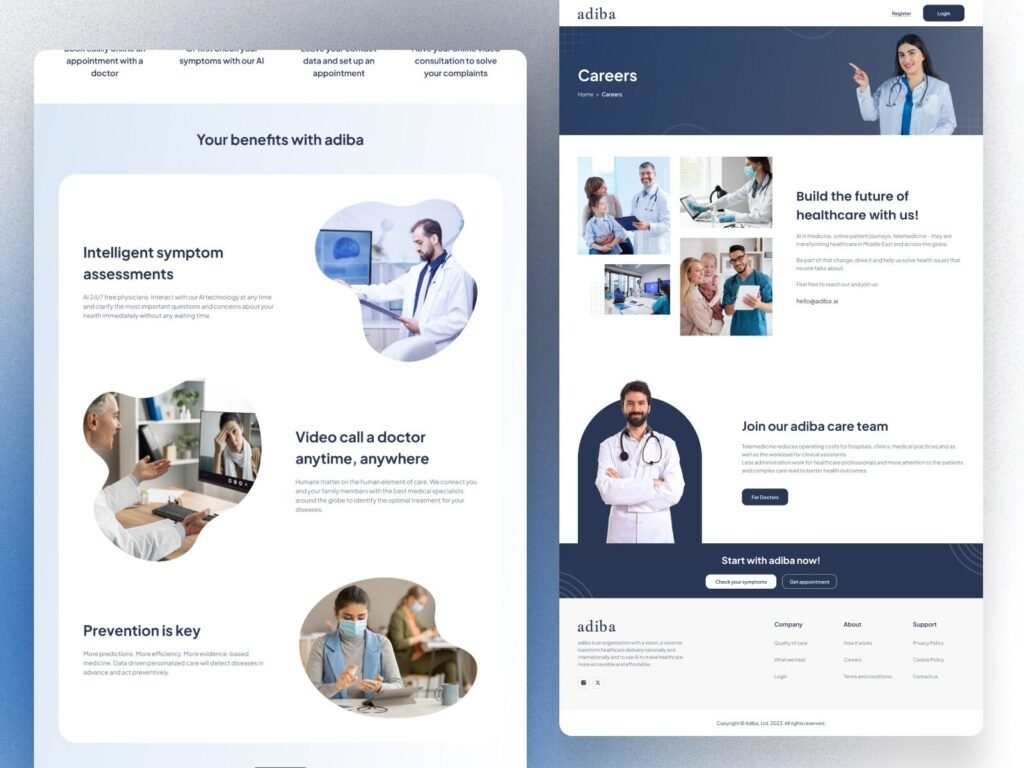
Benefits of telemedicine platform design
7. Healthcare Color Palette & Visual Identity System
The Adiba telemedicine platform uses a thoughtful color strategy designed to enhance usability and establish confidence among users. The selected palette supports clear visual hierarchy, improves readability, and contributes to a calm healthcare environment.
The healthcare color system focuses on:
- Building trust and credibility
- Creating visual consistency
- Enhancing accessibility
- Supporting intuitive navigation
- Improving user engagement
- Reinforcing brand identity
Brand Colors
Soft White — #F9FAFB
Light Blue — #DBEAFE
Primary Blue — #3B82F6
Dark Slate — #1F2937
Why Color Psychology Matters in Healthcare
Effective use of color helps:
- Reduce patient anxiety
- Improve interface clarity
- Strengthen brand recognition
- Enhance overall user experience
- Support patient-centered interactions
A strategic color palette allows telemedicine platforms to deliver experiences that feel both professional and approachable.
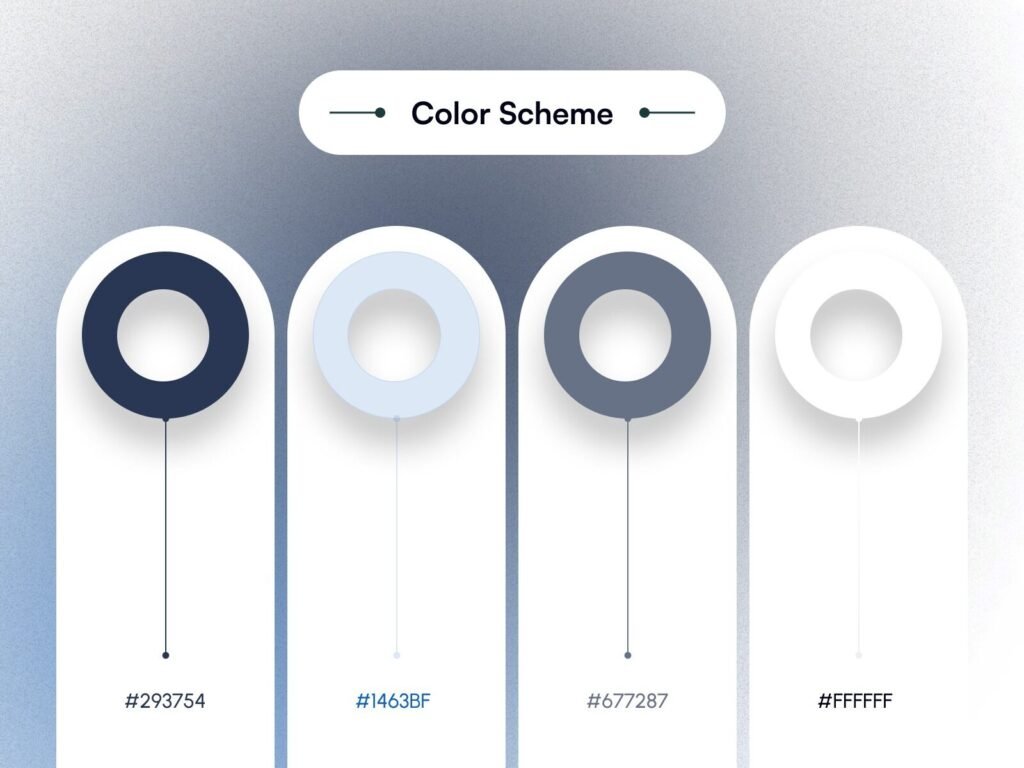
Healthcare app color palette design
8. Typography System for Healthcare Experiences
Typography is a critical component of healthcare UI/UX design. Patients rely on clear, readable content when navigating healthcare platforms, booking appointments, or accessing important medical information.
The Adiba typography system was designed to prioritize clarity and accessibility while maintaining a modern and professional appearance. Consistent typography enhances comprehension, improves usability, and creates a cohesive digital experience.
The typography system focuses on:
- Strong readability
- Clear information hierarchy
- Consistent visual language
- Improved accessibility
- Mobile-friendly experiences
- Enhanced patient understanding
Why Typography Matters in Healthcare UI/UX Design
Effective typography helps:
- Improve content comprehension
- Reduce cognitive load
- Enhance accessibility
- Strengthen user confidence
- Create polished healthcare experiences
By implementing a scalable typography system, telemedicine platforms can ensure that critical healthcare information remains easy to understand across all devices and user groups.
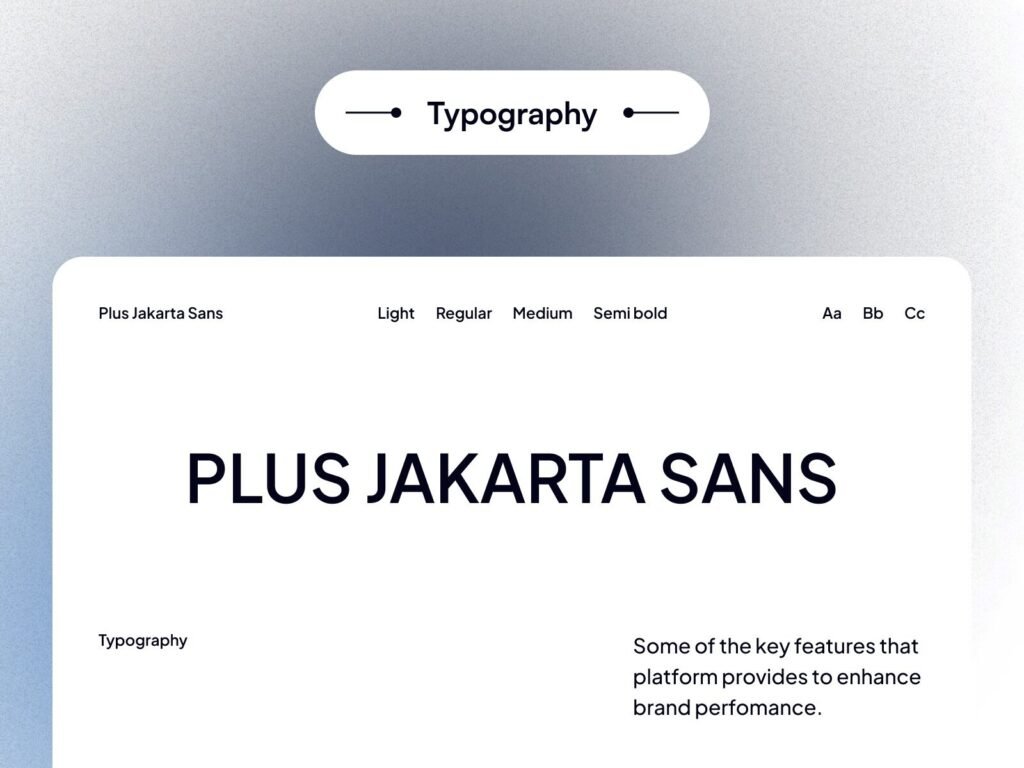
Healthcare platform typography system
Why Businesses Need Patient-Centric Telemedicine Platforms
Telemedicine is no longer an emerging healthcare trend. It has become a fundamental component of healthcare delivery strategies worldwide.
Patient-centric telemedicine platforms help organizations:
- Improve healthcare accessibility
- Increase patient engagement
- Deliver convenient care experiences
- Enhance operational efficiency
- Expand healthcare reach
- Improve patient satisfaction
- Support preventive healthcare initiatives
- Strengthen digital transformation efforts
Platforms like Adiba demonstrate how strategic healthcare UI/UX design can simplify complex healthcare processes while improving outcomes for both patients and providers.
Organizations that invest in best telemedicine website UI/UX practices are better positioned to deliver exceptional healthcare experiences that meet evolving patient expectations.
Conclusion
Modern telemedicine platforms require more than virtual consultation capabilities. They demand intuitive user experiences, secure workflows, responsive interfaces, accessible healthcare journeys, and patient-focused design systems.
The Adiba telemedicine platform concept by Devoq Design demonstrates how strategic telemedicine website design can transform healthcare interactions into streamlined, trustworthy, and engaging digital experiences.
If you’re planning to build a telemedicine solution, virtual healthcare platform, healthcare SaaS product, or patient engagement application, partnering with an experienced healthcare product design team can help transform complex healthcare processes into scalable digital experiences built for the future.